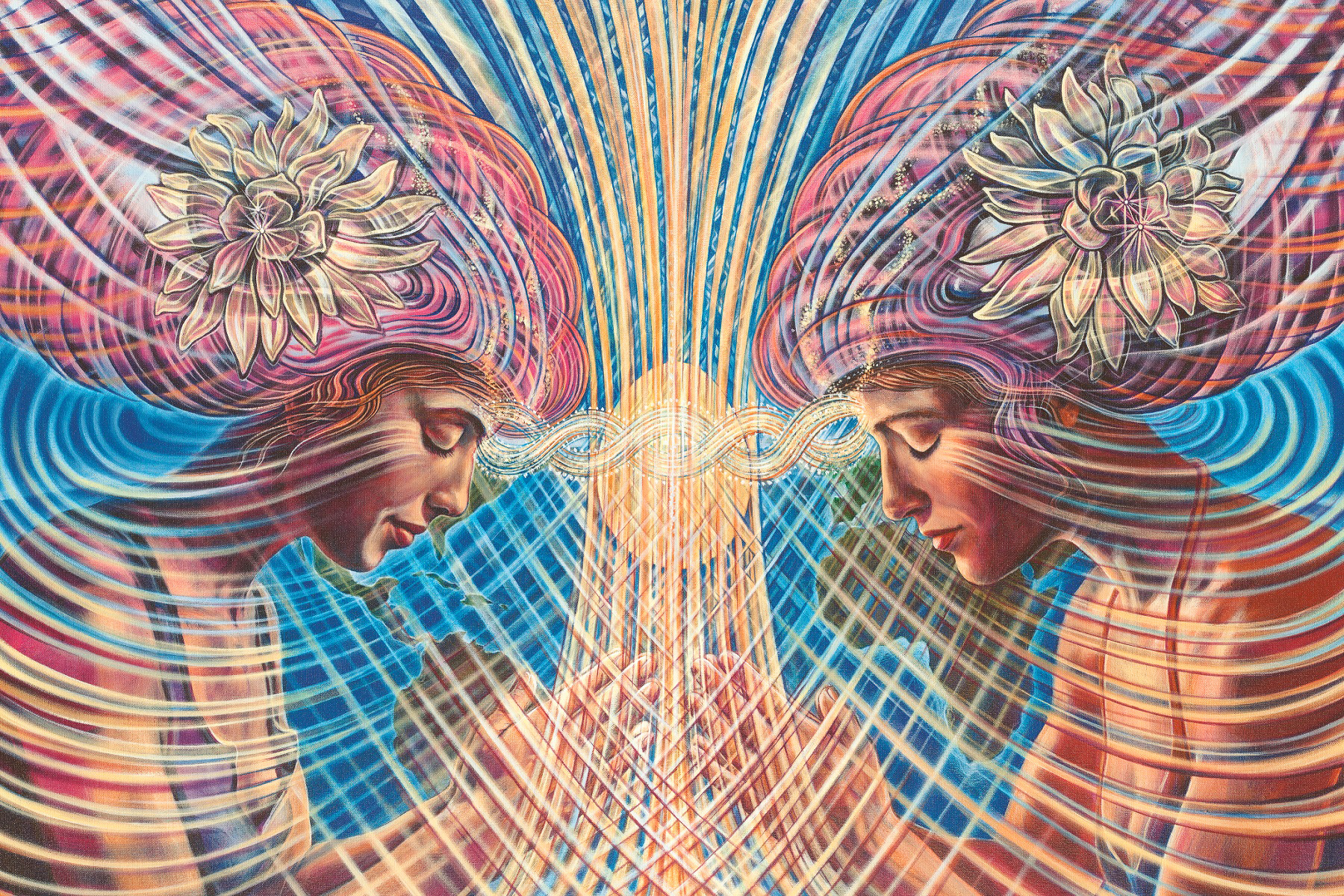
Music can have profound effects on us all. It can make us want to dance, cause us to start singing and even reduce us to tears.
So the question is how does it manage to influence our behaviour and feelings; what is the mechanism at work here?
As humans we can divide ourselves into 3 basic bodies namely the physical, emotional and mental. Beyond that of course we can consider the Spiritual Dimensions. However, the music spoken of here is of the lower realms and relates to the lower bodies.
When we listen to a piece of music our senses are stimulated by different aspects of the song. We suggest that those aspects relate primarily to one of the 3 bodies mentioned above. This is a simplistic approach but it will give us a basic model to initiate this investigation.
Physical Body
The physical body will resonate with the lower frequencies such as the tempo and the intricacies of the rhythms and phrases found within a particular song. It is amazing how much difference timing has on the way a person feels about a piece of music. It has been said that, “it’s not about the notes you play but the spaces you leave between them.”
The body has natural rhythms of its own such as the beating of the heart and the rate of breathing. The relationship between these natural frequencies and those found in a passage of music can have a profound effect on us. It can promote foot tapping, finger clicking, body swaying and of course dancing.
Emotional Body
This seems to respond to the audio spectrum and reacts to pitch, harmonic qualities of notes and tonal sequences. When a musical instrument plays a particular note it can be assigned a vibrational frequency. But if it is analysed the note actually contains a multitude of overtones at much higher vibrational rates. It is the proportions of these overtones that explain the subtle differences between similar instruments.
If you took, say, 5 guitars of the same type from the same manufacturer they would all sound slightly different. This would probably be due to variations in the wood as no two pieces can ever be the same. The same argument can be applied to the human voice; although some can be similar no two are ever exactly the same.
One of the most amazing effects is that of melody, which is a combination of note sequence and timing. If you take 5 notes and play them in a random order (with equal intervals) you can produce 120 tunes. But if you then vary the spacing and hence the rhythm the possibilities are virtually infinite.
The emotional responses that music can evoke are far from subtle. They can lift spirits to ecstatic heights, drive soldiers to kill and cause people to weep.
Mental Body
When listening to a piece of music the mind will be analysing the instrumentation, qualities such as ambience and reverberation as well as the meaning behind the lyrics. This can give rise to a type of intellectual enjoyment or satisfaction from understanding what the composer/producer/musician is trying to convey.
As all the bodies interpenetrate each other our thoughts for example will impact on our emotions and vice versa. In fact all the bodies will be exchanging energies with each other which will result in the overall experience.
The mechanism by which we derive stimulation from the music has to be one of resonance. This implies that we have energy systems within our bodies that demonstrate a range of specific vibrational rates. When we listen to a piece of music it also will contain a range of frequencies. If there is commonality then an energy exchange will occur and we will become conscious of a change within us which is how we “feel” and react to the music in question.
Another field of enquiry is that of generations and their likes of particular types of music. We could assume common tastes occur due to fashion and of course both peer and media influence. However, we should not discount the idea of waves and cycles having a profound yet invisible influence on the makeup of our subtle bodies.
The energies within our physical bodies are hard enough to understand; the energy systems within the emotional and mental bodies even more difficult. They are associated with the Chakra systems and Auric fields which are extremely complex. So, at present, the best we can do is to point out how things may work in a very general way and hope to uncover more detail in the future.
What follows is a very personal transmission from the Hierarchy; I feel that it should be included as it complements perfectly what I have written above.
(N)’s roots go back a long way with music, it’s right there in the core of his Being. He is bound to be asking these questions. Right from the beginnings of time when man first started to bang things together to make sounds, and of course with their voices, music has been the enduring phenomena throughout all history.
Understood and enjoyed by all, in different measures. Certainly there is a type of music for each and every person that they would derive benefit from, physically, emotionally and mentally.
Each culture has a different type of music and even within that culture there is a difference in the type of beat and sounds that people enjoy. On Earth, it is emotions that run almost everything. People greet each other with, “How are you today?” – meaning, how are you feeling? That is, how are your emotions affecting you today?
People sing when they are happy. If you are sad, singing makes you happier. People should be more aware of what music makes them happy. It could help with depression. It is all to do with the person’s “makeup” as to which music they like and would help them to be more emotionally balanced.
It all depends on how someone is feeling because a song/melody one day would be fine and on another day a different piece would be better.
You like music (N) because you are a very emotional person although that isn’t how people see you. You have learnt to balance your life with music in a way that other people would not be able to do. You could write about this, people would benefit a lot, it would make them feel better is this challenging World.