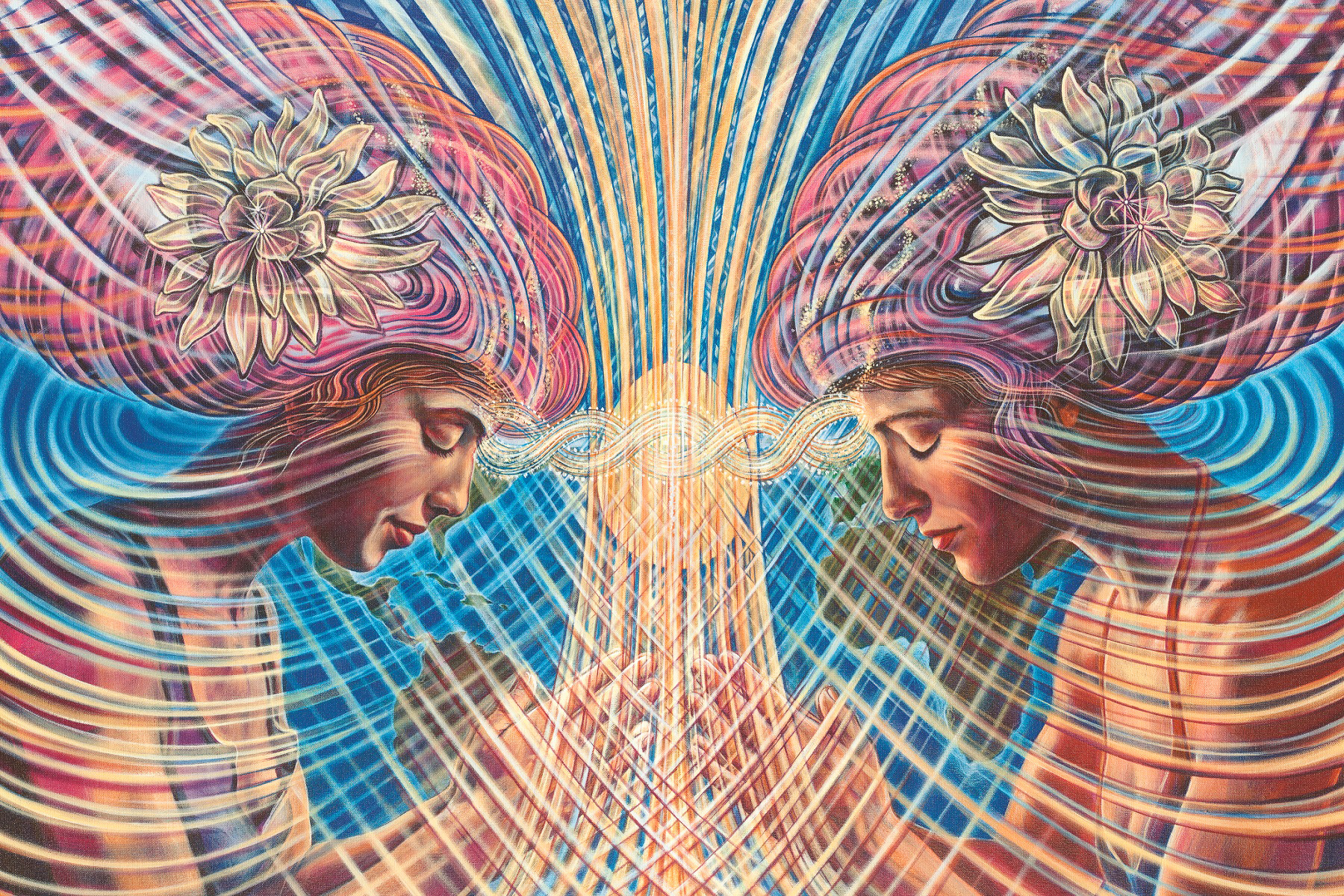
Enlightenment is a profound transformation in consciousness in which the deepest nature of the self and reality is directly recognised. It is not simply a new belief, an intellectual conclusion, or an unusual spiritual experience. It involves a fundamental change in the way identity, separation, and existence are understood.
Throughout history, enlightenment has been described in many different ways. Some speak of liberation, awakening, illumination, self-realisation, unity, or the direct knowledge of truth.
The language varies, but the central movement is often similar: consciousness awakens beyond the limited identity created by thought, memory, personality, and the ordinary sense of being a separate individual.
Beyond the Separate Self
Most people experience themselves as an individual centre of consciousness, separate from other people and from the world around them.
This sense of individuality is useful within everyday life. It allows us to communicate, make decisions, maintain relationships, and care for the practical needs of the body.
Yet a deeper view suggests that the separate self may not be the whole of what we are.
In enlightenment, the individual may directly recognise that consciousness is not confined within the boundaries of the personality. The apparent division between oneself and life may fall away, revealing an underlying unity that had always been present.
The personality continues to function, but it is no longer experienced as the deepest or final identity.
Enlightenment and Awakening
The words awakening and enlightenment are sometimes used interchangeably, but they may also describe different depths of spiritual transformation.
An awakening may bring a powerful glimpse of unity, stillness, expanded consciousness, inner Light, or freedom from the ordinary self. Such an experience can permanently alter a person’s understanding of life.
However, the familiar sense of separation may later return, even when the memory and insight remain.
Enlightenment is generally understood as a more complete and enduring transformation. The recognition is no longer confined to a temporary experience. It becomes the underlying reality from which life is lived.
This distinction is not intended to diminish awakening. An awakening may represent an important opening and a genuine movement towards enlightenment.

Not an Achievement of the Ego
Enlightenment can appear to be something that the individual must acquire through exceptional effort.
Meditation, self-enquiry, spiritual discipline, and guidance may all help prepare consciousness. Yet the separate self cannot possess enlightenment as a personal accomplishment.
The desire to become enlightened can sometimes strengthen the very identity that is eventually seen through.
This does not mean that spiritual practice is unnecessary. Practice may quieten the mind, refine attention, and loosen deeply established patterns of identification.
The final recognition, however, may feel less like gaining something new and more like discovering what has always been present beneath the activity of the mind.
Stillness and Consciousness
Enlightenment is often associated with a stillness that does not depend upon the absence of sound, movement, or activity.
Thoughts may continue to arise, yet they no longer obscure the deeper silence within which they appear.
This stillness is not a blank or unconscious state. It may be experienced as intensely alive, clear, and aware.
The individual may recognise that consciousness remains unchanged while thoughts, emotions, sensations, and circumstances continually come and go.
What we ordinarily call the self may then be seen as a changing collection of experiences appearing within a much greater field of awareness.
Unity and Oneness
Many descriptions of enlightenment include a direct perception of unity.
The world does not necessarily disappear, and individual forms remain visible. Yet the apparent separation between those forms may no longer seem absolute.
People, animals, nature, and the whole movement of existence may be recognised as expressions of one underlying reality.
This recognition can bring profound love and compassion. When others are no longer experienced as entirely separate, their wellbeing naturally becomes more significant.
Unity does not remove practical differences or personal boundaries. Rather, it changes the deeper understanding within which those differences are held.
Freedom from Psychological Suffering
Physical pain, loss, illness, and difficulty can still occur after enlightenment. The human body remains vulnerable, and the circumstances of life continue to change.
Psychological suffering, however, is often intensified by resistance, fear, attachment, and the stories created by the personal mind.
When identification with the separate self falls away, these patterns may lose much of their power.
Sadness can arise without becoming despair. Pain can be experienced without the same continuous struggle against reality. Uncertainty can be present without destroying the underlying stillness of consciousness.
This does not make the enlightened person emotionally distant. On the contrary, freedom from self-concern may allow life and emotion to be experienced more directly.

Enlightenment and Everyday Life
Enlightenment does not necessarily produce an outwardly dramatic life.
The individual may continue to work, care for a family, maintain friendships, and attend to ordinary responsibilities.
The difference lies primarily in the consciousness from which these activities arise.
There may be less need for recognition, control, approval, or personal importance. Action can become simpler because it is no longer continually shaped by the defence of a psychological identity.
An enlightened life may therefore appear very ordinary from the outside, while being rooted in an entirely different understanding of existence.
Misunderstandings about Enlightenment
Enlightenment should not be confused with perfection of the personality.
Habits, individual characteristics, and practical limitations may continue. Enlightenment does not necessarily provide complete knowledge of every subject or make someone incapable of error.
It should also not be assumed that every person who claims enlightenment has undergone the same transformation.
Spiritual language can be used sincerely, mistakenly, or sometimes for personal authority. Discernment remains important.
The clearest indications may be found not in grand claims, but in humility, clarity, compassion, freedom from self-importance, and the way understanding is expressed through life.
A Possibility within Consciousness
Enlightenment is sometimes presented as something available only to rare individuals or distant spiritual figures.
Yet if enlightenment reveals the fundamental nature of consciousness, then that reality cannot belong exclusively to any one person, religion, or tradition.
The path and timing may differ greatly. Some people approach through meditation, others through self-enquiry, devotion, service, suffering, spontaneous awakening, or direct spiritual guidance.
No single description can contain the whole mystery.
What matters is the possibility that consciousness can awaken beyond its ordinary limitations and directly recognise the deeper reality from which all experience arises.
Click for the next page: Experiences
