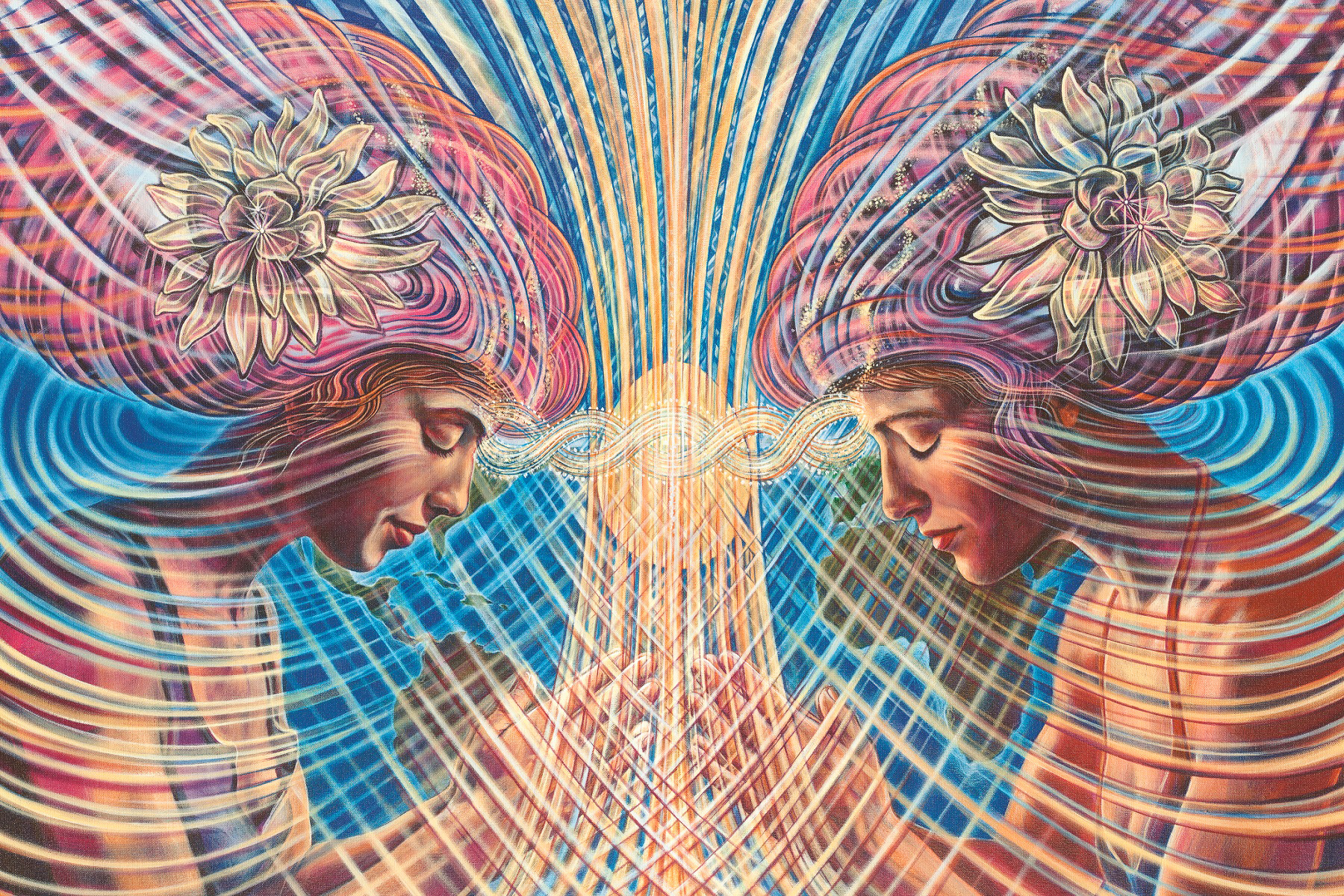
It is important that we are open to Wisdom that may come from other spiritual groups and religions. All knowledge, we are told, comes, initially, from the Hierarchy; unfortunately it can become corrupted.
We speak about time spent on the cushion but very little about the time spent in the World. The way we conduct our daily lives impacts tremendously on our ability to Meditate into the Higher Realms of Consciousness.
I therefore have asked a friend of mine to write a testimonial/article about Insight Meditation which is found within the Buddhist tradition.
“When we left the Light and Sound group we were aware that the practice was not well grounded. It was a very samadhi focussed practice; this is a state of intense concentration achieved through Meditation. In yoga this is regarded as the final stage, at which Union with the Divine is reached (before or at death).
While this was a wonderful practice for experiencing Divine States of Consciousness it was not good for integrating those realisations into everyday life. The Meditator has Enlightenment experiences, however, these experiences have to be grounded in life. The ego can be bypassed and left almost untouched or even strengthened during the process. The ego can then assume the pose of “I” am Enlightened. My own experience is that in the Enlightened state there is no I, no self view. The Enlightened view cannot be sustained along with the ego as Enlightened is unconditioned and the ego, is conditioned.
We spent many years of what I would call integrating practice, the moral part of the “Buddhist” path the so called 8 fold noble path. In Buddhist practice the Enlightenment experience is the beginning of the noble path of purification of the ego, dissolution of reactivity in all of its forms but chiefly greed, hatred and delusion so that a state of understanding that any wish for things to be other than they are is the cause of delusion.
There is samadhi practice and vipassana practice. Vipassana is a way of self-transformation through self-observation. It focuses on the deep interconnection between mind and body, which can be experienced directly by disciplined attention to the physical sensations that form the life of the body, and that continuously interconnect and condition the life of the mind. It is this observation-based, self-exploratory journey to the common root of mind and body that dissolves mental impurity, resulting in a balanced mind full of love and compassion.
The difference is the integration of mind and body, so that the focus is on the sensations within the body. The concentration developed is used to see how reactivity is occurring in our bodies at every moment of our day to day lives so every moment of every day is part of continuing practice. Noticing in every moment how the ego consciousness manifests in reactivity, wanting and not wanting, that results in pulling things towards ourselves, greed and pushing things away from us, aversion or hatred.
The practice is developed by alternating sitting with walking, standing and lying down practice where the awareness, rather than being one pointed samadhi focussed, is more opened to all sensation that arise in the moment, seeing, hearing, emotions, bodily sensations, thoughts and intentions so that every moment is a rich source of continuing enlightening. By this the nature of thoughts and feelings is also understood as being totally conditioned, continually changing and thus not self. This disidentification with our thoughts and emotions is an essential element of developing the ability to maintain awareness in day to day life. By looking at these aspects of the mind, the mind becomes purified so the it no longer wants to create anything other than kindness and love because it knows the harm that ‘unskillful’ mind states cause.
Interestingly in Pali, the Buddha’s language, Enlightenment is a verb not a noun so the the meaning is Enlightening not Enlightenment. An ongoing process of deepening understanding and compassion, love, informed by the clear seeing of the unclouded awareness.
OK so where does that take you? Into a different focus in meditation from the ascending practice to the descending practice where the focus is much more open and inclusive of all of the experience of life. The samadhi and vipassana practice work hand in hand.
It might be helpful to study and understand the role and importance of the 8 fold path of moral conduct. This is something that many Light and Sound groups do not explain or promote in any way and it is the reason why so many Meditators could behave so badly although they had an experience of the Enlightened State.
It is said that the Buddha was awake and Holy. I understand that to mean that he was fully living in the Enlightened State because he was also able to behave in a completely moral state at the same time, a state in which ego is not operating in the normal way but instead is in total service of awareness. A state in which actions are motivated not from greed hatred or delusion but from love, compassion, empathy and understanding.
A simple practice would be spend time getting up off the cushion and walking back and forth along a short path whilst being aware of and open to all the thoughts,emotions and sensations that are arising at the same time in the body.”
We did originally post this article on the First Initiates sites but it has been suggested it could cause confusion. We have therefore moved it here to allow Adepts to use the information as they see fit. (N)