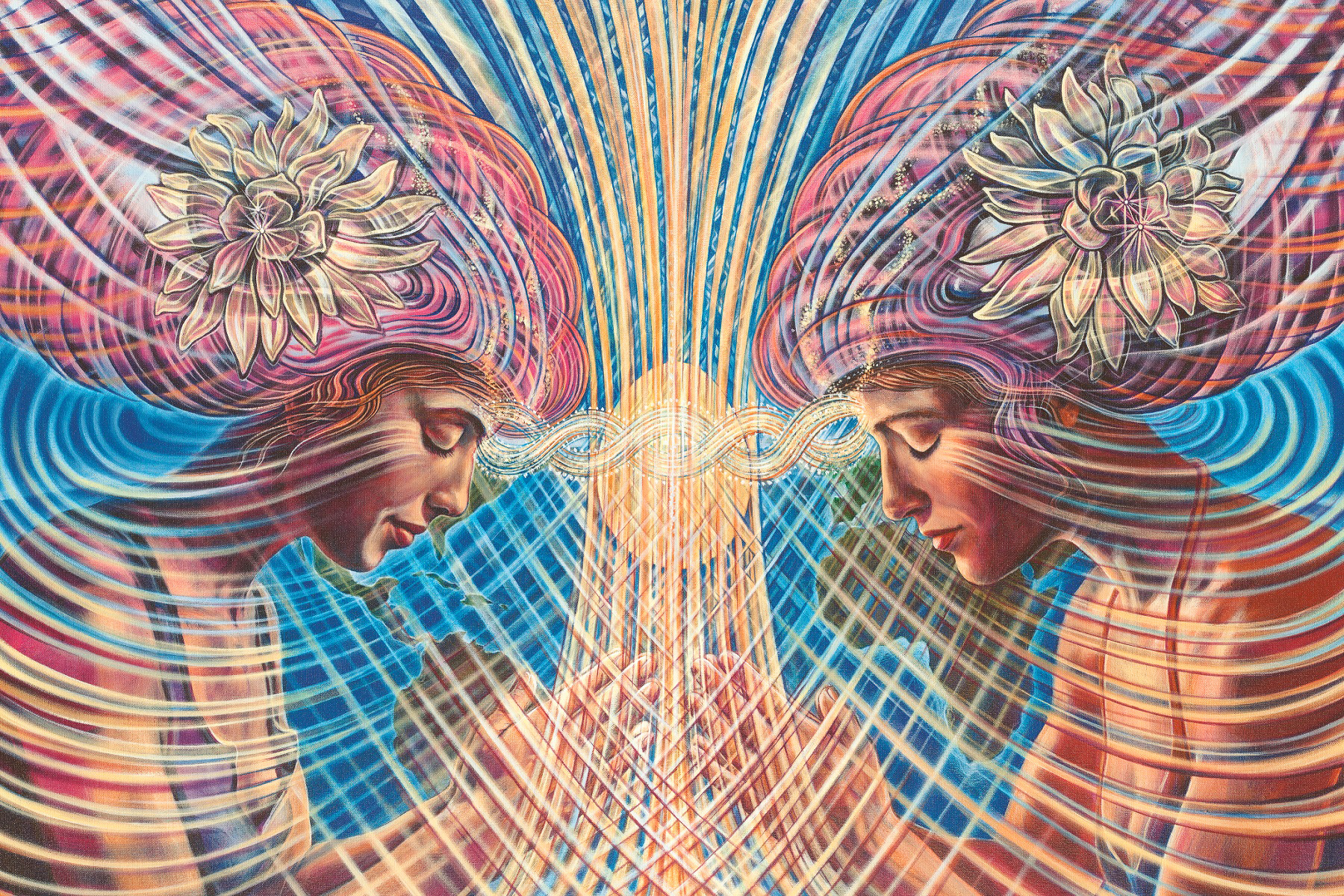
Living enlightenment is not a withdrawal from ordinary life, but a transformation in the way life is experienced and expressed. The responsibilities of the body, relationships, work, and daily activity continue, yet they may no longer be centred upon the same sense of personal separation.
Enlightenment is sometimes imagined as a permanent state of spiritual intensity in which every moment appears extraordinary. A deeper view suggests something quieter and more natural. Life continues to unfold, but it is no longer interpreted entirely through the needs, fears, and ambitions of a separate self.
This does not necessarily make the enlightened person outwardly unusual. The transformation may be most clearly recognised through simplicity, freedom, compassion, clarity, and an increasing absence of personal conflict.
The Ordinary and the Extraordinary
Enlightenment may reveal that the ordinary world has never been separate from the deeper reality being sought.
Walking, eating, speaking, resting, working, and relating to others remain part of life. Yet these activities may be experienced without the same continuous sense of psychological ownership.
There can be a recognition that life is simply happening. Thoughts arise, actions take place, and circumstances change, but consciousness itself remains open and undivided.
The extraordinary is no longer necessarily found elsewhere. It may be recognised within the simplicity of the present moment.
Freedom from the Separate Self
The separate self is usually experienced as the centre of thought, feeling, decision, and identity. It appears to be the individual who is living life and attempting to control what happens.
Enlightenment may reveal that this centre is not what it once appeared to be. Thoughts, memories, emotions, and personality continue, but they are no longer assumed to constitute an independent and permanent self.
This does not mean that individuality disappears or that the person becomes incapable of ordinary choices. Rather, the individual may function with greater freedom because less energy is devoted to defending, maintaining, and promoting a psychological identity.
There may still be preferences and practical needs, but they are held more lightly.

Relationships after Enlightenment
Relationships remain an important part of human life. Enlightenment does not remove differences of personality, perspective, or circumstance.
However, when the sense of separation becomes less dominant, relationships may contain greater openness and less psychological demand. Other people are no longer experienced only in relation to what they can provide, confirm, or threaten.
Compassion may arise more naturally because the boundary between oneself and others is understood differently.
This does not mean accepting harmful behaviour or abandoning sensible boundaries. Clarity and compassion can exist together. Genuine understanding may sometimes express itself through tenderness and patience, and at other times through firmness and directness.
Thoughts and Emotions
Enlightenment does not necessarily bring an end to every thought or emotion.
Thought remains necessary for communication, planning, memory, and practical activity. Emotions may also continue as natural movements within the human organism.
The difference may lie in identification. Thoughts and feelings can arise without automatically becoming the basis of a renewed personal story.
Sadness may be present without creating a permanent identity of suffering. Anger may arise without becoming hatred. Pleasure may be enjoyed without the belief that it must be preserved.
Experiences move through consciousness, but consciousness itself is not limited by them.
Challenges and Human Vulnerability
An enlightened person continues to inhabit a human body and may still experience illness, tiredness, pain, ageing, loss, and practical difficulty.
Enlightenment should not be confused with physical perfection or immunity from the conditions of life.
There may also be a period of adjustment as a profound realisation becomes integrated through the personality and everyday circumstances. Old habits may continue for a time, even when the identity that sustained them has fundamentally changed.
This is one reason why spiritual claims should be considered carefully. A genuine realisation does not require the denial of human vulnerability.

Action without Personal Importance
When action is no longer dominated by the need to strengthen a separate identity, it may become simpler and more appropriate to the situation.
Service, creativity, teaching, work, or care for others may continue, but with less concern for recognition or reward.
This does not mean that enlightened people must adopt a particular role. Some may live publicly, while others remain almost entirely unknown. Some may teach, while others express their understanding through family life, friendship, practical work, or quiet presence.
The form is less important than the consciousness from which the action arises.
Continuing to Deepen
Enlightenment may be understood as complete freedom at the deepest level of identity, yet its expression through a human life can continue to unfold.
Understanding may become increasingly embodied within speech, behaviour, relationships, and service. The personality may grow quieter, clearer, and more transparent to the reality that has been recognised.
There may therefore be no contradiction between enlightenment and continuing development.
The essential realisation may be complete, while its expression within time continues to deepen.
Click for the next page: Testimonials
